Jared Sacks

ShareThis

Overview

EVENTS

PAPERS, HOW-TO & INSIGHT

VIDEOS

In this section we bring you:
 
  • EVENTS in which we describe and discuss happenings of significance to audio technology
  • A selection of technical PAPERS. Some of these are very technical and so each one has a brief summary. The full paper is available as a PDF Download
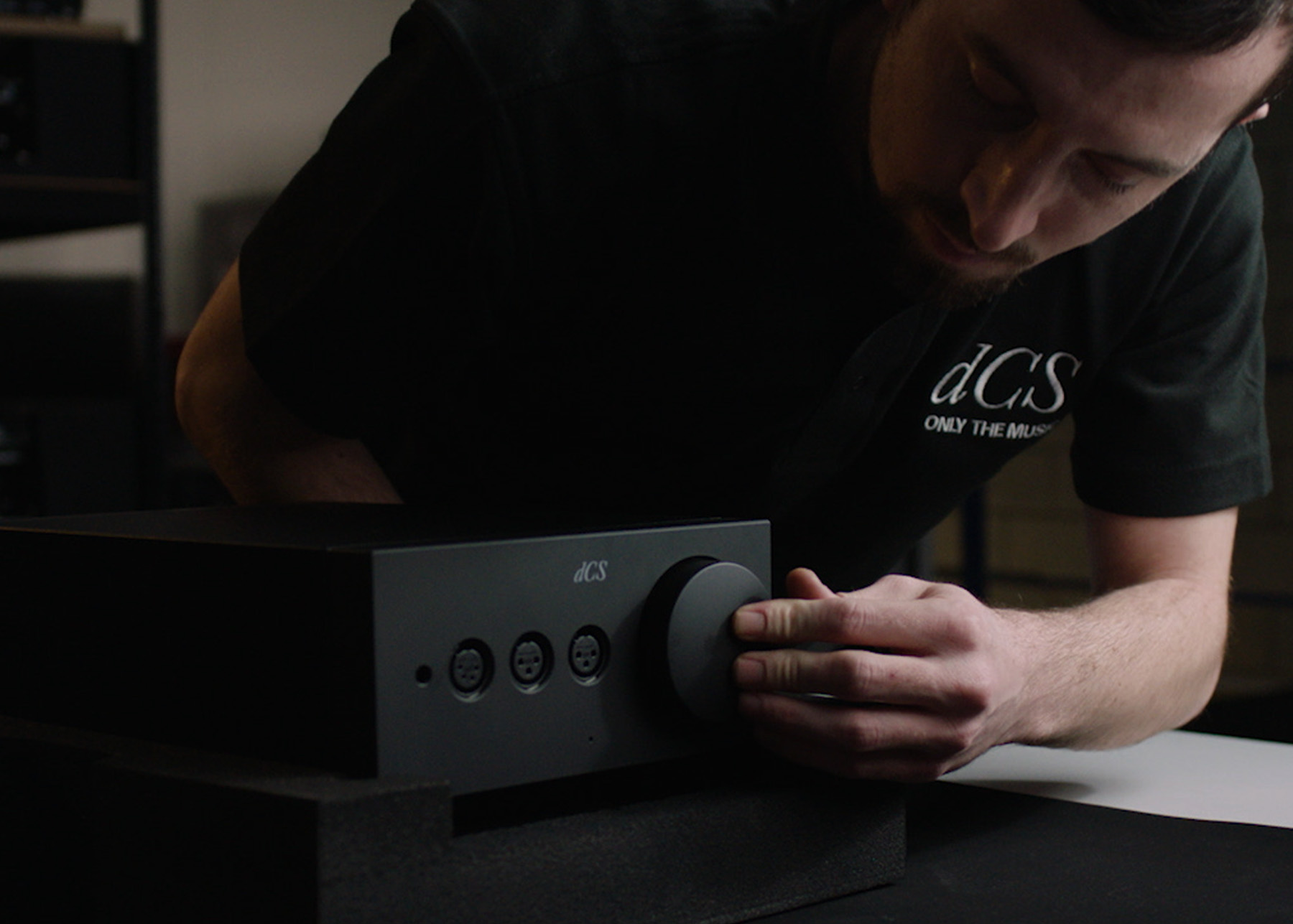
  • VIDEOS of interest to audio- and musicophiles. We start with a short film showing the machining process for the manufacture of a dCS Puccini Transport fascia
  • ARCHIVE where we will store old papers as we publish more and more new ones

Events

 
DSD over USB
 
The future of high end audio has never been more exciting. The ability to stream audio over USB and the increasing availability of high resolution studio masters means  listeners can now play back music in their home exactly as the artists intended.
 
On a pleasant Autumn evening in late September David Steven, Managing Director of dCS, and Andy McHarg, Technical Director unveiled their ‘DSD over USB playback solution’ at the beautiful premises of Amsterdam hi-fi dealer Rhapsody Sound and Vision. The audience consisted of a number of distinguished audio journalists including HiFi+ Editor Alan Sircom, The Audio Beat’s Chris Thomas and Chris Connaker, the man behind the US specialist audio website Computer Audiophile. Music for the evening was supplied by Northstar Recording’s Bert van der Wolf who gave a full commentary on each of the featured DSD master recordings.
 
David and Andy explained that dCS were seeking to develop an open standard for DSD over USB that can be used by any playback software or DAC manufacturer. The idea behind this solution was that the end user would not require any special hardware or software drivers to enable this feature. Developing this solution, while maintaining the very highest playback quality standards, posed some formidable challenges. dCS’ ingenious solution packs pure DSD data in such a way that any DAC capable of handling 24/176.4 data can be adapted to process this pure DSD data. In effect this streams pure DSD data directly from the computer to the DAC without the need for DSD to PCM conversion.


To prove the effectiveness of this solution music supplied by Turtle Records was played back from a MacBook Pro running Channel D’s Pure Music software that was in turn connected to a dCS Debussy DAC through Audioquest Diamond USB cable. Amplification consisted of a Spectral DMC-30SS Series 2 preamp together with their DMA-260 power amp. The rest of the system comprised of a dCS U-Clock, MIT cables and Avalon Acoustics speakers.
 
The result? Chris Connaker of Computer Audiophile summed it up as follows:
 
‘Pure Music effortlessly sent this pure DSD data to the Debussy producing wonderful sound quality. One track in particular contained a solo drummer and produced astounding dynamic range. The drums sound like they were literally being played in the room.’
 
dCS have already implemented this technology in their Debussy DAC and will be offering it as a simple software upgrade for all their components with USB inputs.

Papers, How-To & Insight

Measurements in Digital Audio

Listening to music is easy. Appreciating music is easier still. Understanding the intricacies of how the music made its way from the concert hall to your front room is altogether more complex.
 
The measured performance and specs of any given component in the playback chain are often used by people to help them understand what to expect from it and also sometimes what they may actually sound like.
 
However, both reviewers and consumers can often find themselves focusing on the number that, in reality, doesn't actually tell you very much about the musicality of a hifi component. This is because you can get widely different products in terms of how they operate but with very similar scores.
 
Click below for a brief guide to the measurements that matter in digital audio.


View PDF

Videos

Puccini Transport Fascia

Even the process of creating the front fascia panel illustrates our desire for perfection with the finest aluminium billets being machined to extremely fine tolerances and then inspected again and again so that only those that are absolutely immaculate are allowed to grace our products. NO COMPROMISE!


ALBUM OF THE MONTH
 
Britten's WAR REQUIEM
 
London Symphony Orchestra
 
conducted by Gianandrea Noseda
 
Sabina Cvilak (Soprano),
Ian Bostridge (Tenor),
Simon Keenlyside (Baritone)
 
LSChorus, Choir of Eltham College


Inevitably any new recording of Britten’s War Requiem will be compared to the composer’s legendary 1963 recording, also with the LSO. So – can this new one hold its own against that one...and can two Englishmen (Ian Bostridge and Simon Keenlyside) and a Slovenian (Sabina Cvilak) match an Englishman (Peter Pears), a German (Dietrich Fischer-Dieskau) and a Russian (Galina Vishnevskaya), the soloists chosen by Britten for his recording? The answer is a resounding ‘Yes’!

Britten’s performance is characterised by real anger, reflecting his own staunch pacifism and uncompromising hatred of war. Noseda’s is equally as emotional but tones down the anger to some extent and replaces it with a compelling sense of profound meditation. This is apparent from the opening notes that are played at a significantly slower tempo than Britten adopts and, to reinforce the effect, Noseda gets the choir to whisper the words of the Requiem Aeternam rather than sing them. Then again the Wilfred Owen poems that regularly punctuate the piece feel noticeably less aggressive in their delivery in this new recording. Try, for example, ‘Out there’ in the Dies Irae. Pears and Fischer-Dieskau spit the words out with real venom, whereas Bostridge and Keenlyside adopt a more ‘controlled’ approach and deliver the words in an almost sarcastic tone of voice that, consequently, manages to express not just anger but also the utter futility of war. Not to be outdone the excellent Sabina Cvilak (whom I had not previously heard) adopts a far ‘quieter’ approach than that of Galina Vishnevskaya in Britten’s performance. For example, her rendering of the Sanctus introduces an element of profound spiritual mystery that is lacking in Vishnevskaya’s not only faster but substantially louder delivery.

Will this new recording make me want to give up the earlier one? No – but nor do I now want to be without this new one. Comparing the two merely reinforces the fact that there is no single ‘perfect’ performance of great music; rather the truly great is open to many different, but equally valid, interpretations.

This is an important recording and not to be missed by lovers of great music. For further information visit the LSO site. Click for a free high resolution DOWNLOAD of another great performance from the LSO.

ROCK
POP
JAZZ
CLASSICAL
WORLD
LEGENDARY
PERFORMANCES
DOWNLOADS